Short answer
Unknown, in a measured sense. As of November 2026, Walter Writes publishes no accuracy or false positive figure for its AI detector, and no independent benchmark we track includes it. Walter itself says no detector can guarantee 100% accuracy, so use its score as one signal alongside a second detector.
"Is the Walter Writes AI detector accurate?" gets asked hundreds of times a month, mostly by people who have just seen a score and want to know how much weight it deserves. The honest answer is that nobody outside Walter has measured it in public yet. That is not a criticism unique to Walter: most detectors publish a headline claim and few publish a method. This page explains what Walter does publish, what that tells you, and how to test the detector on your own writing in ten minutes.
For plans, Turnitin and account questions, see the Walter Writes guide.
How accurate is the Walter Writes AI detector?
Walter's AI detector page describes the tool as high precision and says it minimises false positives across ChatGPT, GPT-5, Claude and Gemini. It does not give a percentage, a test set size, or a false positive rate. Its own FAQ answers the reliability question with "No AI detector can guarantee 100% accuracy".
Compare that with the detectors that do publish numbers. Some vendors quote a single accuracy figure; a few, such as Pangram and Proofademic, publish a false positive rate with a test set size. The figures in the table below are each vendor's own claims, not independent results, which is the main point: a published method is what lets you weigh a claim.
| Detector | Published accuracy figure | Published false positive figure | Independent benchmark |
|---|---|---|---|
| Walter Writes | None published | None published | None found (November 2026) |
| Pangram | Over 99% (vendor) | About 1 in 10,000 (vendor) | Several 2025 studies |
| GPTZero | Vendor claims vary by test | See our review | RAID 2024, Stanford HAI 2023 |
| Originality.ai | Vendor claims near-perfect on raw AI text | See our review | RAID 2024 |
Sources for the other rows are in our reviews of each tool and in our roundup of the best AI detectors. The independent benchmarks named are the RAID benchmark (2024) and the Stanford HAI study (2023); Walter Writes is not among the tools either one tested.
What the Walter detector actually shows you
The score is easier to judge once you know what the tool returns:
- A probability score. The detector gives a likelihood that the text is AI-generated, based on patterns such as how predictable the word choices are (perplexity) and how much sentence length varies (burstiness). Our guide to how AI detectors work explains both signals.
- Highlighted passages. Walter's help centre says flagged sections are highlighted when text is classified as AI, and nothing is highlighted when it is classified as human.
- Free scans inside a plan. According to the help centre, scanning text in the detector does not use your word allowance; only humanised words count.
- Multiple languages. Walter lists 80+ languages on its pricing page; the detector page names Spanish, French, German and Portuguese among them.
Why a detector built next to a humaniser needs a second opinion
Walter sells a humaniser and a detector in the same app, and its humaniser page invites you to scan output in the built-in checker before submitting. That is convenient, but it means the tool that rewrote the text also grades it. Any vendor in that position has the same problem, which is why we suggest checking important work in a detector from a different company too. Our list of free AI detectors covers options that need no account.
It also explains why scores differ between tools. Every detector is trained on different data and sets its own threshold, so the same paragraph can score low in one and high in another. Our piece on Turnitin vs GPTZero shows how far two well-known detectors can disagree on identical text.
How to test the Walter detector yourself
You can get a useful read on any detector in ten minutes with three samples:
- A page you wrote before 2022. An old essay or email is almost certainly human. If the detector flags it, you have found a false positive.
- A raw AI answer. Ask ChatGPT, Claude or Gemini a question and paste the reply unedited. A working detector should flag most of it.
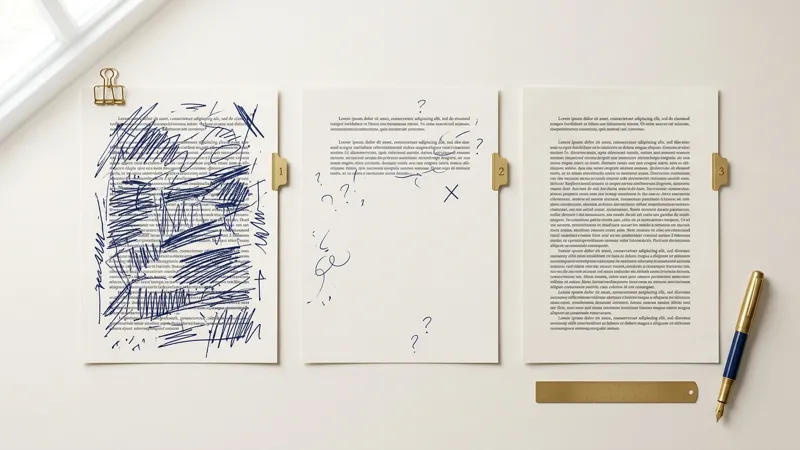
- A mixed draft. Take the AI answer and rewrite half of it in your own words. See whether the highlights move to the half you left alone.
Run the same three samples through a second detector and compare. If the two agree on all three, you can lean on the score a little more. If they disagree, treat both as weak signals.
| Sample | What a good result looks like | What a warning sign looks like |
|---|---|---|
| Your own pre-2022 writing | Low AI score, few or no highlights | High AI score on text you know you wrote |
| Unedited AI answer | High AI score, most sentences highlighted | Low score on raw model output |
| Half rewritten draft | Highlights concentrated in the untouched half | Highlights spread evenly or missing |
When the score matters, and when it does not
For checking your own draft, a detector is a quick prompt to reread flat passages. For judging someone else's work, the bar is much higher. Turnitin explains in its guidance on sentence-level false positives why a highlighted sentence is not proof of AI use, and Walter's own detector page frames detection as supporting understanding rather than punishment. The same rule applies to every tool on this page: no single detector score should decide an academic misconduct case.
How this page was researched
We read Walter Writes' AI detector page, pricing page and help centre in November 2026, checked the tool lists of the RAID and Stanford HAI studies, and searched for independent tests naming Walter Writes. We did not run a benchmark for this page; the self-test above is a method for readers, not a published result. Related reading: does Turnitin detect Walter Writes and how to use Walter Writes.
Frequently asked questions
Is the Walter Writes AI detector accurate?
There is no published measure. As of November 2026, Walter publishes no accuracy or false positive figure for its detector and no independent benchmark includes it. Walter says no detector can guarantee 100% accuracy. Use it as one signal and confirm important results with a second detector.
How reliable is Walter Writes' AI checker compared with GPTZero?
GPTZero appears in independent benchmarks such as RAID (2024) and the Stanford HAI study (2023); Walter's detector does not. That means GPTZero's strengths and weaknesses are better documented, not that one is proven more accurate on your text.
Does the Walter Writes detector use up my words?
No. Walter's help centre says scanning text in the AI detector does not use your subscription word allowance. Only words processed through the humaniser count towards your monthly balance.
Can the Walter Writes AI detector show which sentences are AI?
Yes. According to Walter's help centre, text classified as AI-generated shows highlighted passages, and text classified as human shows no highlights.
Is the Walter Writes AI detector free?
Walter offers a free trial of its checker, and the mobile app includes a free tier for detection. On paid plans, detector scans do not count against your monthly word allowance.